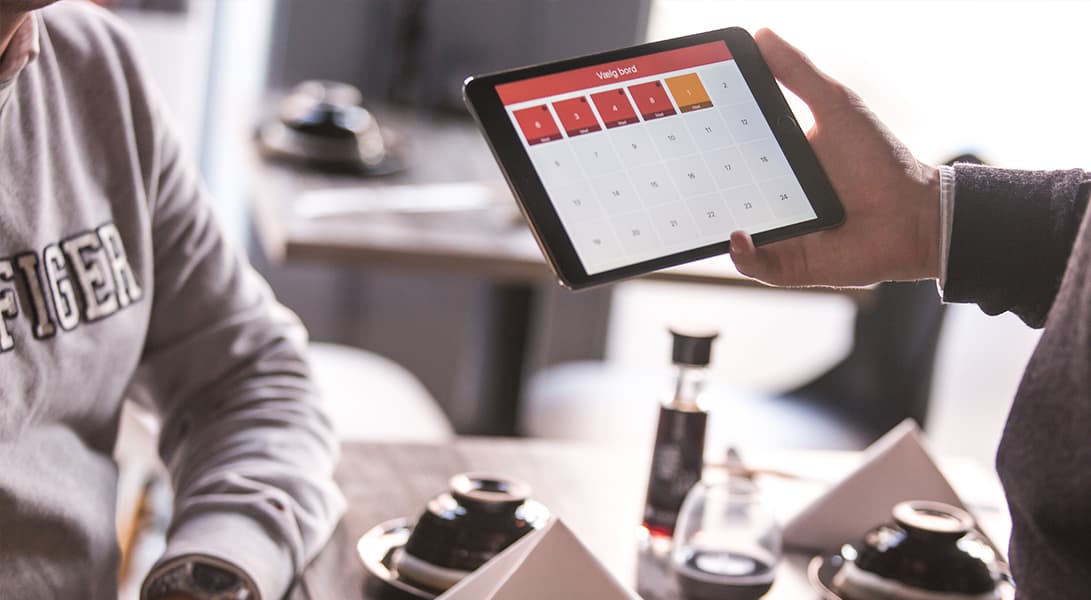
A restaurant’s point-of-sale (POS) system is the heartbeat of the business. It handles payments, tracks sales, and helps keep day-to-day service running smoothly. But when it comes to building a smart schedule, even superheroes need a sidekick.
They’re essential—yet there are still jobs a POS could use a little help with.
Key Takeaways
- Build schedules from real sales: Use POS data to forecast labor with up to 95% accuracy.
- Stop early punch-ins: Clock-in enforcement can prevent $508 per month in unbudgeted labor.
- Save manager time: Dedicated scheduling tools can cut scheduling time by 14 hours every month.
- Works with top POS systems: 7shifts integrates with 50+ restaurant POS systems, including Toast, Square, Clover, and TouchBistro.
What is POS-scheduling integration?
A POS-scheduling integration is when your POS and scheduling software automatically share data so your schedule is built and measured against real sales and real hours.
In practice, your POS sends sales data into your scheduling tool for forecasting, and your employee punches sync back for labor tracking. That means less guesswork, fewer manual updates, and faster decisions.
- Sales data → forecasts: Staff to demand, not instinct.
- Time punches → labor: See scheduled vs. actual in real time.
- Synced roles and employees: Cleaner reports and fewer admin headaches.
That’s why it’s a good idea to integrate your pos with your scheduling tool. A web- and mobile-based tool like 7shifts offers free integration with your restaurant’s existing POS software, combining sales data with scheduling, time clocking, and payroll.
Why use a dedicated scheduling tool over built-in POS schedulers
Some POS systems include a built-in scheduler, but the features are usually basic, and managers still end up doing a lot of manual work.
With 7shifts restaurant scheduling software, managers can save 14 hours every month by building schedules online.
- Faster scheduling: Copy, adjust, and publish in a few clicks.
- Fewer compliance surprises: Built-in alerts help you stay labor compliant.
- Less paper, less chasing: Updates don’t live on a printout.
With the 7shifts app, employees can request time off, swap shifts, and update availability from their phones. Managers can review and approve changes in real time without digging through texts.
As managers make real-time updates, staff always have the most current schedule at their fingertips.

The power of POS integration
A dedicated scheduling tool that works with your POS can increase profitability and improve customer experience. It also informs smarter decisions while saving you time on scheduling.
When your scheduling tool pulls POS data, you can schedule from sales and labor forecasts with up to 90% accuracy.
For example, you may plan for five servers in the third week of January. But a quick forecast shows a post-holiday slump, so you staff four instead and still hit service targets.
POS integration can help control labor costs by enforcing schedules at the clock-in screen. If someone isn’t scheduled—or tries to punch in early—a system like 7shifts can block the punch.
For perspective: an employee who regularly clocks in 15 minutes early can cost hundreds of dollars in added labor over one year. According to the National Restaurant Association, labor costs for full-service restaurants represented a median of 36.5% of sales in 2025.
When systems don’t talk, managers end up copying numbers from one place to another, and mistakes happen. Integration automates the handoff so your numbers stay consistent.
- Forecasting: Less guesswork, better coverage.
- Labor reporting: Scheduled vs. actual is easier to spot.
- Payroll prep: Fewer manual corrections.
7shifts integrates with some of the top POS systems in the industry:
- Toast
- Square
- Lightspeed
- Clover
- Brink POS
- Union
- Cake
- Heartland
- Aloha
- Micros 3700
- POSitouch
- Squirrel Systems
- TouchBistro
- Rezku
- Chowbus
- Future
- GoTab
- Oracle MICROS
- Peppr
- Qu
- Quantic
- Restaurant Manager
- Revel
- Revi
- Selflane
- Silverware
- SkyTab
- SpotOn
- Tonic
Read more about 7shifts’ integrations here.
How to integrate your POS with your scheduling tool
Most POS integrations take just a few minutes to set up. The exact clicks vary by provider, but the flow is usually the same.
- Pick compatible tools: Confirm your scheduling tool supports your POS.
- Connect accounts: In your scheduling tool, open Integrations, select your POS, and authorize access.
- Sync people and locations: Map locations and import employees/roles so reporting is accurate.
- Validate the data: Confirm sales and punches are syncing before you rely on forecasts.
Tip: Do your first sync on a slower day so you can verify everything calmly.
7shifts offers free setup support for POS integrations, so you’re not troubleshooting it alone.
Key features to look for in a POS-scheduling integration
Not all integrations are created equal. Here’s what to look for before you commit.
| Feature | Why it matters |
| Real-time sync | Sales and punches update automatically, so forecasts and labor numbers stay current. |
| Forecasting | Uses historical POS data to predict demand and help prevent overstaffing. |
| Clock-in enforcement | Blocks early or unscheduled punches to keep labor spend under control. |
| Easy setup + support | Faster time-to-value and fewer “we’ll fix it later” integrations. |
| Mobile access | Makes updates, approvals, and communication easier for managers and staff. |
Frequently Asked Questions
Can a POS system integrate with other software?
Yes—most modern POS systems integrate with scheduling, payroll, inventory, and accounting software through native integrations or APIs.
Is there an app that schedules waiters at a restaurant?
Yes—7shifts is a restaurant scheduling app used to schedule servers, bartenders, cooks, and more, with features like availability, shift swapping, and labor tracking.
How do you set up a POS integration?
Usually it takes 5–10 minutes: connect your POS inside your scheduling tool, authorize access, and map locations and employees.

Amanda McCorquodale, Author
Amanda McCorquodale
Author
Amanda McCorquodale is freelance writer based in White Plains, NY.
