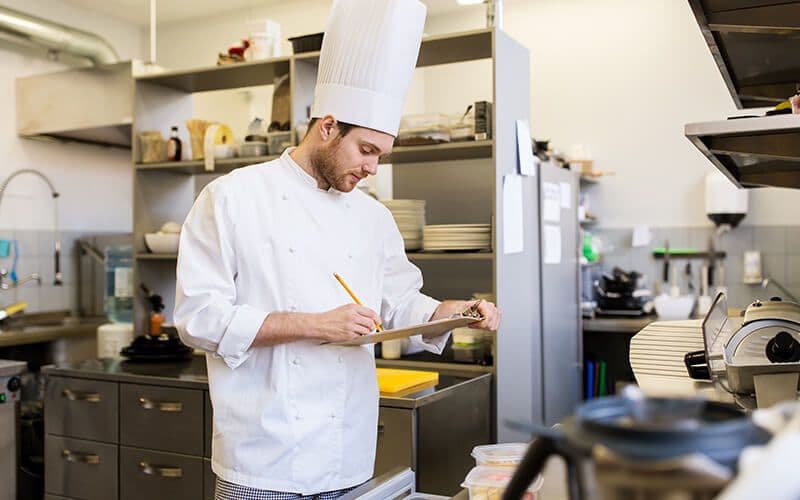
Health inspections might feel like a pop quiz, but they’re routine checkups designed to keep your guests safe. What do health inspectors look for in a restaurant? And what is the best way to prepare for an inspection? Those are the two questions operators ask most. According to the Centers for Disease Control and Prevention (CDC), about 48 million people in the U.S. get sick from a foodborne illness each year, with 128,000 hospitalized and 3,000 deaths. Inspectors exist to help you avoid becoming part of that statistic. This guide covers both questions so you can pass every time.
What is a restaurant inspection checklist?
A restaurant inspection checklist is a document that outlines everything a health inspector evaluates during a visit. It covers food handling, storage, employee hygiene, sanitation, pest control, and facility conditions. Most operators also use an internal version to run self-inspections and catch problems before an inspector arrives.
What do health inspectors look for in a restaurant?
Inspectors focus on the conditions and habits most likely to cause foodborne illness. When they walk through your doors, expect them to evaluate:
- Food temperature control — cold foods below 41°F, hot foods above 135°F, and proper cooking temps
- Food storage — FIFO labeling, raw below ready-to-eat, items six inches off the ground
- Food preparation and handling — thawing methods, cross-contamination prevention, cooking temperatures
- Employee hygiene — handwashing, glove use, illness policies, hair restraints
- Cleaning and sanitation — sanitizer concentrations, clean equipment, no buildup
- Pest control — no signs of rodents or insects, sealed entry points, clean drains
- Documentation and certifications — temperature logs, cleaning schedules, staff food-handler certificates
Inspectors also test staff knowledge by asking questions like “What temperature should chicken reach?” or “How do you handle a sick employee?” A well-trained team is your best asset.
How a typical inspection works and how to prepare
Who conducts inspections and how often
Your local or state health department enforces food-safety rules. Most jurisdictions base their regulations on the Food and Drug Administration (FDA) Food Code, the federal model adopted (with variations) across the country. Inspections are unannounced, and how often they happen varies by location. New York City, for example, schedules an unannounced inspection at least once a year, while other jurisdictions like Los Angeles County inspect more often. You may also get a visit after a complaint.
The four-step inspection process
- Introduction: The inspector shows credentials and explains the process.
- Inspection: They walk through your kitchen, storage areas, and dining room, checking temperatures, observing staff, and reviewing records.
- Assessment: Violations are documented and categorized (critical vs. non-critical).
- Follow-up: You receive a report, discuss findings, and schedule any required re-inspection.

How to prepare for a restaurant health inspection
Run test inspections. Walk your restaurant with a checklist before an inspector does. Assign this task to a manager weekly and track completion in a shared checklist or task tracker. Routine self-checks turn surprises into non-events.
Develop a HACCP plan. A Hazard Analysis and Critical Control Points plan identifies the specific risks in your operation and how you’ll control them. The FDA’s HACCP guidance walks you through building one.
Keep your eyes open. Walk your line during service. Check cooler temps when you arrive. Notice the small stuff — a dirty gasket, a cracked cutting board, a loose floor tile — before it becomes a citation.
2026 Labor Costs Playbook
Increase your bottom line with insights from over 500 restaurant pros—learn the true cost of employee turnover, the best way to manage labor costs, and proven strategies to protect profits.
Critical areas to cover in your restaurant inspection checklist
Sanitation
Sanitation is the baseline. Inspectors look for clean floors, walls, and ceilings; properly sanitized equipment and utensils; and no buildup of grease or food debris. Your three-compartment sink procedure matters: wash, rinse, sanitize, air dry. Test sanitizer concentrations with strips and keep logs.
For a deeper dive on daily and weekly cleaning routines, see our guide on how to effectively sanitize and clean your restaurant.
Cutting boards deserve special attention. The Academy of Nutrition and Dietetics recommends using separate boards for raw meat and ready-to-eat foods, and replacing any board with deep grooves that can harbor bacteria.
Food storage
Store cold foods at 41°F or below and hot-held foods at 135°F or above. Anything between 41°F and 135°F is the “danger zone” where bacteria multiply rapidly. The FDA provides clear guidance on refrigerator and freezer temps.
Key rules:
- FIFO (First In, First Out) — Label everything with a date, rotate stock, and use older items first.
- Six inches off the ground — Store all food and single-use items at least six inches above the floor to prevent contamination and make cleaning easier, per industry standards.
- Raw below ready-to-eat — Store raw meat on lower shelves, with poultry at the bottom, to prevent drips onto food that won’t be cooked again.
Food preparation
Cooking to the right internal temperature is your last line of defense against foodborne pathogens. Use a calibrated probe thermometer every time.
Safe internal cooking temperatures
| Food | Minimum internal temp |
|---|---|
| Poultry (whole, pieces, or ground) | 165°F |
| Ground meat (beef, pork, lamb, veal) | 160°F |
| Whole cuts (steaks, chops, roasts) | 145°F + three-minute rest |
| Fish and seafood | 145°F |
| Eggs (for hot-holding or batch cooking) | 160°F |
| Reheated leftovers | 165°F within two hours |
These safe minimum internal temperatures come from USDA and FDA guidance.
The danger zone: Between 41°F and 135°F, bacteria multiply to unsafe levels quickly. When cooling cooked food, bring it from 135°F to 70°F within two hours, then from 70°F to 41°F within another four hours.
Thawing: Never thaw food on the counter. The U.S. Department of Agriculture (USDA) approves three methods: in the refrigerator (slowest, safest), under cold running water (cook immediately after), or in the microwave (cook immediately after).
ServSafe certification covers these fundamentals and is required in many states.
Serving customers
Keep service stations clean and stocked. Tongs, serving spoons, and other utensils should be stored handle-up or in running water. Check buffet temps every 30 minutes. Cover sneeze guards and replace any that are cracked.
Employee hygiene
Your staff’s habits matter more than any other single factor. Inspectors watch for proper handwashing (20 seconds with soap and warm water) before handling food, after touching raw proteins, and after every break.
About 40% of restaurant foodborne illness outbreaks with identified contributing factors are linked to sick or infectious workers, according to the CDC. The FDA’s Employee Health and Personal Hygiene Handbook details when employees should be excluded from work. Red flags include vomiting, diarrhea, jaundice, and diagnosis of norovirus, Salmonella, Shigella, E. coli, or Hepatitis A.
Build a habit: ask every employee how they’re feeling at shift start. If you use scheduling software with an employee health check feature, staff can log symptoms before clocking in. Either way, catching illness early protects your guests and your team.
Pest control
Pests are an automatic critical violation in most jurisdictions. According to the National Pest Management Association, rodents and insects significantly increase the risk of foodborne illness outbreaks.
Prevent problems before they start:
- Seal all entry points — gaps around pipes, cracks in walls, and spaces under doors.
- Empty trash frequently and keep dumpsters away from the building.
- Clean floor drains weekly to prevent drain flies.
- Schedule regular pest control visits and keep service logs on file.
The most common restaurant health code violations
Knowing what gets other restaurants cited helps you avoid the same mistakes. These are the violations inspectors flag most often:
- Temperature abuse: Food held in the danger zone (41°F–135°F) for too long. Hot foods cooling on the counter, cold foods sitting out during prep.
- Missing temperature logs: No documentation of cooler, freezer, or hot-holding temps. If you didn’t record it, you can’t prove it.
- Cross-contamination: Raw meat stored above ready-to-eat foods, shared cutting boards, or unwashed hands between tasks.
- Poor hand hygiene: Employees skipping handwash steps, touching ready-to-eat food with bare hands, or not washing after handling raw proteins. Strong team communication helps reinforce these habits.
- Improper food storage and labeling: Undated containers, food stored directly on the floor, or missing allergen labels.
- Dirty or broken equipment: Greasy hood vents, buildup on slicers, cracked containers, or non-functioning thermometers.
- Signs of pests: Droppings, gnaw marks, live insects, or missing pest control logs.
Most of these are preventable with daily routines. Fix issues the moment you spot them.
How restaurant inspection scores and grades work
Inspection results are reported differently depending on your jurisdiction. The two most common systems are:
- Letter grades (A, B, C) — Common in cities like New York and Los Angeles. An “A” typically means fewer than a set number of violation points; lower grades require a re-inspection and can be posted publicly.
- Numeric scores (0–100 points) — Many counties deduct points per violation. Critical violations carry heavier penalties than non-critical ones.
In both systems, violations are usually classified as:
- Critical — Directly related to foodborne illness risk (temperature abuse, cross-contamination, employee illness). Often require immediate correction.
- Non-critical — General maintenance, labeling, or procedural issues. May get a deadline for correction.
Check with your local health department for the specific scoring criteria in your area. Some jurisdictions require you to post your grade or score where customers can see it.
State-specific resources for restaurant inspections
Requirements vary by state and county. Use the links below to find inspection guidelines, schedules, and contact information for your area. If your state or county isn’t listed, search “[your city] restaurant health inspection” to find your local health department.
California
Health inspections in California are handled locally. Start with your county:
New York
At the state level, New York offers a guidance and resource center for food service operators. Like California, New York runs inspections by county. New York City has its own restaurant inspection process page, and resources are also available for Albany, Erie, and Onondaga counties.
Other state-specific resources
- Arizona: Maricopa County, Pima County
- Florida: State of Florida
- Georgia: State of Georgia
- Illinois: Entire state, Chicago
- Massachusetts: Boston, Worcester
- Michigan: Detroit, Kent County, Washtenaw County
- New Jersey: Bergen County, Middlesex County
- North Carolina: Entire state, Mecklenburg County, Wake County
- Ohio: Entire state, Cincinnati, Cleveland, Columbus
- Oregon: State of Oregon
- Pennsylvania: Allegheny County, Philadelphia
- Texas: Entire state
- Washington: State of Washington
Restaurant inspection FAQs
What do health inspectors look for in a restaurant?
Inspectors check food temperature control, storage practices, employee hygiene, sanitation, pest control, and required documentation. They also observe staff to see if food-safety habits are followed in practice.
What is the best way to prepare for a health inspection?
Treat every day like inspection day. Run self-inspections weekly, keep temperature and cleaning logs current, train all staff on food-safety basics, and fix problems the moment you find them.
How often do restaurant health inspections happen?
Inspection frequency varies by location. Some areas inspect once a year, others several times a year, and you may also get a complaint-driven visit based on your past violation history.
What are the most common health code violations?
Temperature abuse, cross-contamination, poor hand hygiene, improper food storage and labeling, and signs of pests. Most are preventable with consistent daily routines.
What do I do after the health inspection is over?
Review your inspection report carefully. For any violations, correct them immediately and document what you fixed. If a re-inspection is required, schedule it promptly. Use the findings to update your self-inspection checklist and staff training.
What happens when a restaurant fails a health inspection?
Outcomes depend on the severity of violations. Minor issues may require correction by a deadline. Critical violations could mean an immediate re-inspection, temporary closure, or permit suspension. In most cases, you’ll have a chance to fix problems and be re-inspected.
What documentation do I need for a health inspection?
Keep temperature logs for coolers, freezers, and hot-holding units. Maintain cleaning schedules and pest control service reports. Have staff food-handler certificates on file, along with your most recent inspection reports and any corrective action records.
Passing your restaurant inspection
A successful inspection starts long before the inspector walks in. It’s the result of daily habits: checking temps at opening, washing hands between every task, rotating stock, cleaning as you go. When these routines are second nature to your team, a surprise visit is just a routine day.
Build inspection-readiness into your schedule. Assign opening checklists, mid-shift temp checks, and closing duties to specific people. Use a task management tool to track completion. When everyone knows what’s expected, nothing slips through.
Training matters too. New hires should learn food-safety basics during onboarding, and experienced staff need regular refreshers. Good habits take repetition.

Justin Holmes, CMO
Justin Holmes
CMO
CMO at 7shifts