|
|
This month’s issue is looking like restaurant life these days. Bit of a mixed grill.
Gas prices are up, alcohol sales are weird, customer feedback forms are somehow still controversial, and Seattle’s minimum wage is high enough to spark an identity crisis.
There’s a lot going on out there. Let’s dive in!
|
|
|
|
 |
Navigating sober reality |
 |
Feedback on feedback |
 |
Can high wages actually hurt employees? |
|
|
|
|
Does Seattle’s $21.30 minimum wage actually benefit employees? Or does it create new problems when every second of labor counts? Read on for one operator’s POV.
|
|
 |
BY THE NUMBERS
|
|
|
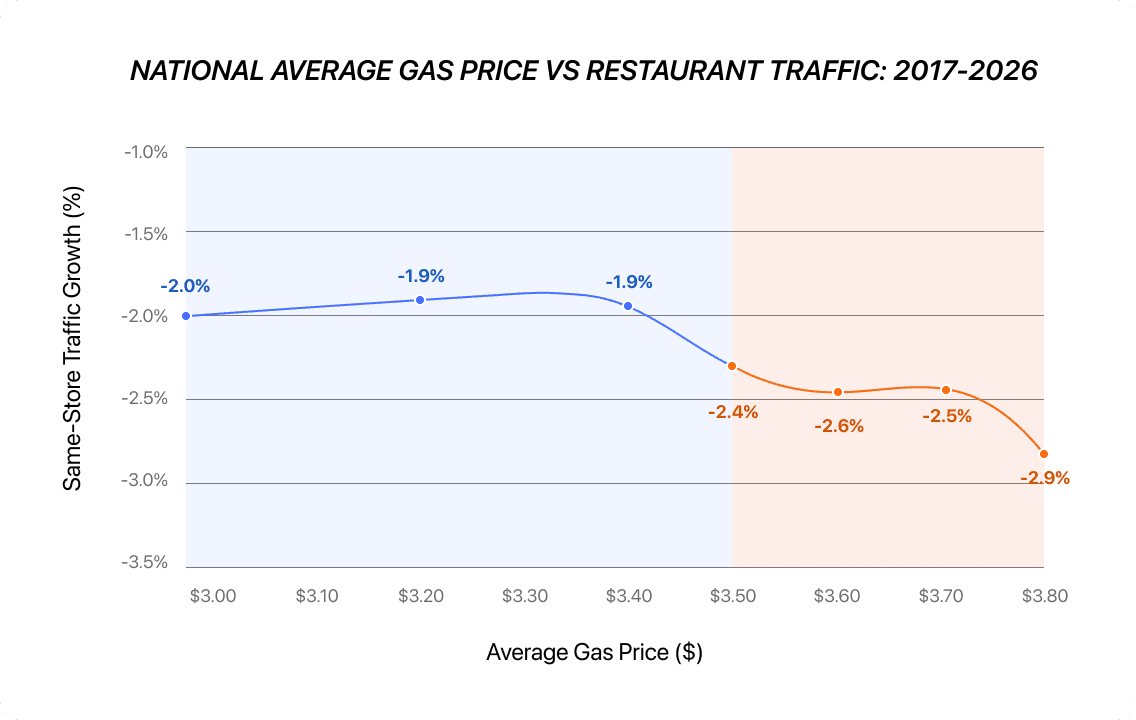
Can high gas prices slow down restaurant traffic? Black Box Intelligence says yes. While traffic has averaged a 2% decline since 2017, it drops slightly more when fuel costs go up.
|
 |
$3.50
The price per gas gallon when restaurant traffic starts to dip. |
|
 |
2.4%
The traffic decline when gas exceeds $3.50 per gallon. |
|
 |
2.9%
The traffic decline when gas exceeds $3.80 per gallon. |
|
|
|
Big picture: some restaurants will feel this more than others. As gas prices rise, casual and family dining take the biggest hit, while QSR and fast-casual pick up the traffic. Fine dining stays mostly insulated (because $4 gas doesn’t hit as hard when dinner’s already $100).
Victor Fernandez, CIO of Black Box: “You cannot outprice the gas pump, so you have to double down on the experiential factors—service speed, consistency and perceived value—to ensure that you don’t lose your core guest.”
|
|
 |
RESTAURANT HEADLINES
|
|
Guests are drinking alcohol less. Here’s what it’s actually costing restaurants.
A recent Forbes piece covered the decline in alcohol sales: while 77% of people went out to eat last month, only 49% of dine-in customers actually had a boozy drink away from home.
To put the numbers in perspective, restaurants already run on razor-thin 3 to 5% margins. Drinks are one of the few items where margins actually start to look decent. Packaged beer typically sits at around 75%. And pour cost? That still sits at 18 to 20% margin.
So when someone skips the drink, it’s not just a $12 cocktail gone. It’s one of the few high-margin items on the bill disappearing. Multiply that across a whole table (or a few tables), and suddenly that ‘busy night’ doesn’t hit the same.
While there are a lot of reasons behind this (think: health, economy, and the shift to off-premise dining), the bigger question to ask is—what can operators do about it? “The more thoughtful response has been to stop defining the beverage program as ‘alcohol plus a few soft drinks’ and start treating it as a full profit center built around occasion, choice, and trade-up.”
🥤 Start with zero proof: Mocktails are on the rise, but numbers show soda, hot drinks, and iced drinks stay winning as subs. Build out the full lineup: premium sodas, specialty teas, espresso drinks, refreshers, and zero-proof cocktails. More options equal more chances to win the add-on.
✨ Invest in execution: If your zero-proof option shows up looking like an afterthought, guests will treat it like one. The spots doing this well are dialing in presentation, like different glassware, solid garnish, a certain *something* that actually feels intentional.
🍸 Rethink the format: Mini cocktails, half pours, tasting flights—these give guests more control (and less commitment) while still keeping drinks on the table. It’s an easy way to meet the ‘I’m thinking of maybe having one’ crowd without losing the sale.
|
|
 |
DEBATABLE
|
|
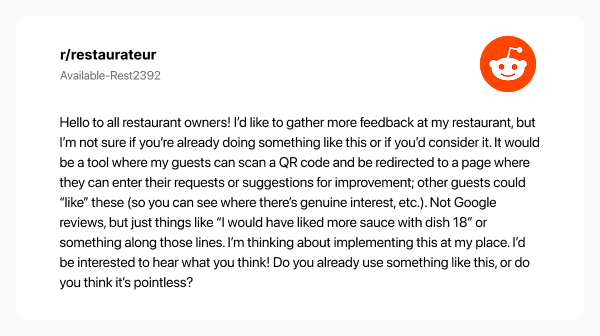
Q: Do customer feedback forms *actually* work?
The latest restaurant debate on Reddit: customer feedback forms.
|
|
|
|
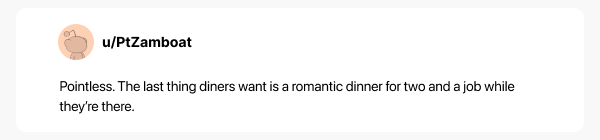
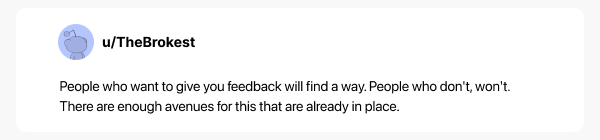
Some operators say it’s not worth the hassle. And if there’s a will, there’s a way… without the need to ask.
|
|
|
|
|
|
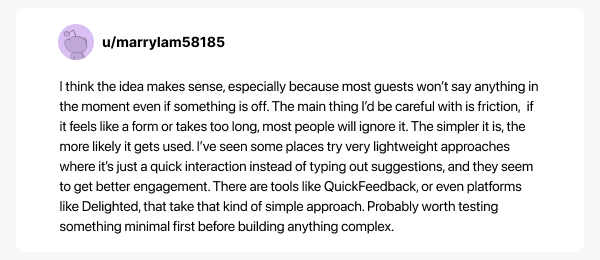
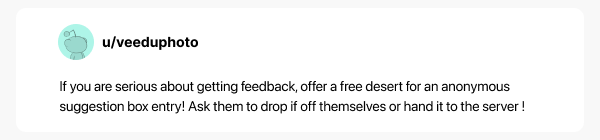
Others are all in, but with a catch that you need a little strategy, like less friction and maybe a few freebies.
|
|
|
|
|
Side note: If you’re on Team Latter, we’ve got a free customer feedback template ready to go.
|
|
 |
FOOD FOR THOUGHT
|
|
|
|
Do restaurant workers really win with a higher minimum wage?
At $21.30, Seattle’s minimum wage is the highest in the country. Here’s a look inside who wins and who doesn’t—from a Seattle operator’s POV on the Restaurant 101 Substack.
✅ Where workers are winning: Line cooks who were making $13 are now making mid-twenties inside city limits. Workers in strong, high-volume spots have more stable income and more leverage—because when labor costs this much, managers actually have to treat hiring as a big decision. You stop carrying the chronically late and invest in star players.
✅ Where operators are winning: Some restaurants figured out how to surf it. They moved prices without apologizing, built smaller and sharper teams, and cross-trained aggressively. Higher-rated spots with strong repeat business and tight systems are actually holding their ground, and in some cases pulling ahead, as weaker concepts are forced to exit.
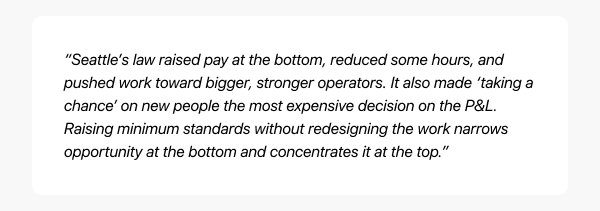
But here’s what the numbers reveal: University of Washington research on Seattle’s early wage phase found that while wages rose about 3% for workers already in jobs, hours actually dropped 6 to 7%. Plus, the hiring of people new to the labor market fell. Managers get selective, so the entry-level door narrows.
|
|
|
His advice for operators battling a higher minimum wage?
Get precise with your numbers, instead of guesstimating the schedule. Be honest with new hires about what the job actually demands (high pay = high expectations). And protect the first rung on your ladder: keep one slot for the person who’s never done this before and build a real path in for them. That one decision, he says, changes what your kitchen looks like in three years.
Higher wages and access to higher wages aren’t the same thing. Worth keeping in mind (and reading more about).
|
|
 |
QUIET ON SET
|
|
|
Shift swaps shouldn’t live in texts, DMs, and crossed fingers for the are-they-actually-gonna-show-up-or-not anxiety spiral. Sam Fung breaks down how to build an official swap channel, set clear rules for eligibility and deadlines, and stop last-minute no-shows before they happen.
|
|
|
|
 |
À LA CARTE
|
|
|
|