
Oh, the dog days of summer. Patios are packed, the AC’s working overtime, and everyone’s vying for long weekend time off. And if you’re running a multi-location operation, you’re probably juggling 20 things at once just to keep every store moving in the same direction.
This issue has a little bit of everything: why your restaurant might be invisible in AI search, hard-earned lessons from an operator who scaled from one location to eight, and a healthy debate over whether staying open seven days a week is actually worth it.
On the menu
 Is ChatGPT ghosting your restaurant?
 Growing pains
 The case for a slow-day closure
In honor of The Bear’s final season, Food Runner service starts now. Let’s go!

By the numbers
A small group of loyal guests can have a huge impact on your business. Here’s what the latest data from Toast and Resy found:

7%
of guests can drive up to half of your total order volume.

48%
of guests say being remembered is what makes them feel most valued.

77%
of guests tip more at restaurants where they’re regulars.

4x
The rate customers are more likely to return after joining a loyalty program.
The math is clear. Regulars matter. A lot. So here’s a breakdown from Restaurant Dive on why guests leave and how you can build stronger relationships that keep them coming back.

Restaurant headlines
The AI void is real, and it’s picking favorites.
A recent study from Local Falcon tested 10,000 restaurants across the U.S. to see who shows up (and who doesn’t) when someone asks AI where to eat. The results were pretty brutal.
Nearly 3 in 4 restaurants never show up at all in Google’s AI recommendations when a diner asks for nearby recommendations. Meanwhile, the top 10% of restaurants are soaking up almost 75% of all the AI visibility out there. In other words, a small club is getting picked (over and over) while everyone else disappears.
David Hunter, CEO of Local Falcon: “For a restaurant, that means getting shut out of AI Overviews completely, right as those overviews have become the way most people search because Google has promoted AI Overviews to the very top of the page.”
AI tools might not be building their answers off Google reviews at all. One citation analysis found that Wikipedia supplies almost half of ChatGPT’s go-to sources, and Reddit does the same for Perplexity.
On the other hand, Google Maps, Yelp, and TripAdvisor (aka: the places your brand has spent years building up) don’t register as much. So a location can have thousands of five-star reviews and still be invisible, because the AI was never reading them to begin with (though that might be changing as Yelp recently struck a licensing deal with OpenAI to surface its reviews in ChatGPT).
So what actually works? One Redditor suggests small businesses have the edge, so optimizing like a mom and pop *if you’re able to* could be the way to go:
r/localseo
u/does_ai_make_it_easier
I actually think AI could level the playing field for smaller businesses. Multi-location brands often use generic, cookie-cutter content across locations, while independents can go deep on service details, highlight unique offerings, and collect highly specific reviews.
AI systems thrive on granular, context-rich data, like “gluten-free, open late, delivers downtown”, so if you structure your GBP, service pages, and FAQs with that detail, you’re more likely to surface. It shifts the game from pure authority to relevance and specificity.
Small businesses that optimize for depth and authenticity may actually have an edge over bigger but less nuanced competitors.
Provide detailed information about your services or products on your website. AI bots will collect and display this data to users searching for relevant terms. With AI traffic currently accounting for less than 1% of most websites’ traffic, focus on ensuring your website content is clear, comprehensive, and easily accessible.
And another expert in the article says, “The restaurants that win won’t be the ones who spend the most.” It comes down to clean, structured data, consistent info everywhere the brand shows up, and content an AI can actually quote.
Malou’s also got a deeper breakdown on AI discovery for restaurant groups, if you want to go down the rabbit hole.

Heard!
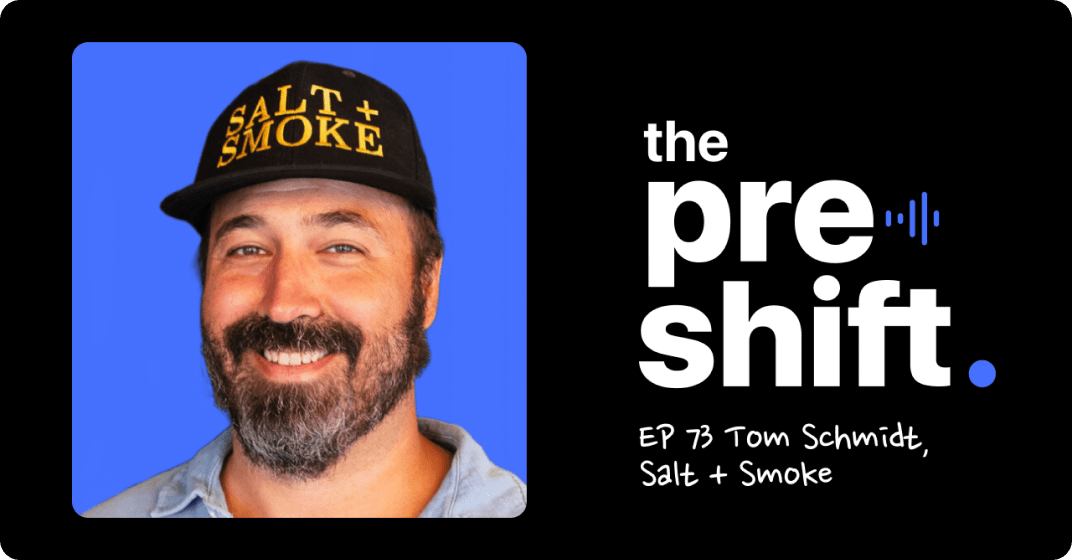
ICYMI: The Pre-Shift podcast is back! Host D.J. Costantino sat down with Tom Schmidt, co-owner of Salt + Smoke BBQ, to talk about what it actually takes to grow from one location to eight—and over 550 employees along the way. So if unit #2 (or #20) is somewhere on your radar, this one’s worth your attention. A few key takeaways:
On which location jump was the most difficult...
Jumping from one to two—and not even at Salt + Smoke. It was Tom’s second venture, Nico. “I didn’t have that team composition down at all, and Nico failed miserably because of that.” The lesson: you can’t scale past one location without a team you actually trust to run it without you.
On what to delegate (and to who)...
Get honest about what you’re actually good at. For Tom, that meant bringing in Haley (now co-owner) for operations and product, and later a director of operations for the numbers and leadership side. “What am I good at? What am I not?” was the whole exercise.
On keeping your best people from outgrowing you...
Tom and Haley hit a wall early: their best sous chefs and front-of-house managers were ready to move up, but with one location, there was only one GM chair and one executive chef chair. Opening location #2 created two of each, giving their best people somewhere to go instead of walking out the door.
On how to stay aligned across so many stores...
A weekly cascade: corporate meeting Wednesday, all-GM meeting Thursday, executive chef meeting Friday, then store-level meetings over the weekend. The structure is what keeps the stores rowing in the same direction.
On what to say no to when scaling...
New concepts, mostly. Tom shares that chasing a new shiny idea is a distraction from the harder, boring work of actually running what you’ve already got.
A lot more meat and potatoes in this episode than we could recap in one issue. Listen to the full show—also available on Spotify, Apple Podcasts, and wherever else you get your podcasts.

Spotlight
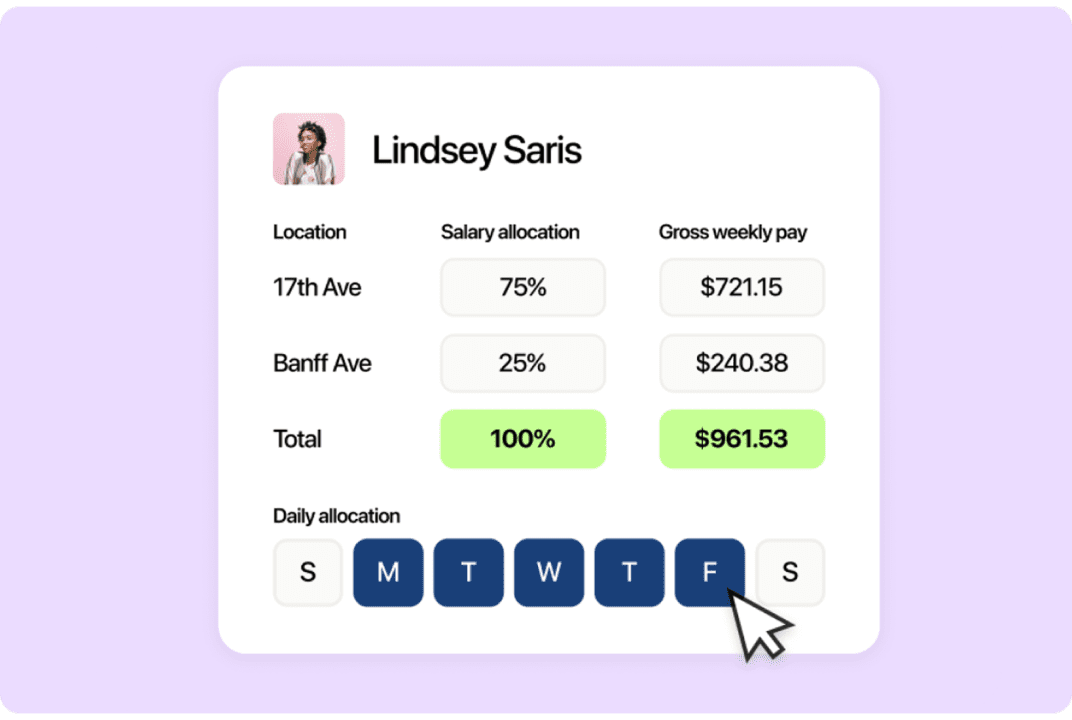
Growing past one location is exciting... until you’re the one trying to keep everything straight across five, ten, or fifty of them. That’s why 7shifts gives multi-location operators the tools to keep every store on track:
📍 Location-level compliance settings: Tracks labor laws automatically (with advanced rules for 15+ jurisdictions), so you’re not manually checking which city or state has which rule when scheduling.
💸 Custom salary allocation: Splits an employee’s pay across the stores they actually work in, without a spreadsheet nightmare at the end of the month.
🧾 Multi-EIN Payroll: Handles different legal entities under one roof, so there’s no need to run payroll separately for each store.
Pair that with the Location Dashboard, and you get a real-time view across every restaurant, making it easier to catch issues before they hit payroll. After all, growth should make your business stronger, not leave one location dragging down the rest.
Learn more about how 7shifts supports multi-location restaurants.

Food for thought
r/restaurateur
u/solamon77
Thinking of staying closed one day a week. Anyone done this yet?
At the moment my restaurant is open 7 days a week, but one of those days is much slower than the rest. Sunday, if it matters. I’m thinking of just staying closed on that day. We still make a little money on that day though (enough to be open), but I’m hoping that at least some of those customers might come in on another day instead.
Plus it will make staffing much easier and afford me the ability to throw team building parties and events for my crew.
Has anyone tried something like this? What was your experience? Did you notice sales increases on the other days? Any insight you all can offer me?
Should you close on your slowest day? One restaurant owner took this question to Reddit, and the replies turned into a debate over what the restaurant week is actually for.
Some takeaways from the thread:
✅ The math may be smaller than it feels: One owner ran the numbers, and closing for one day a week (or about 14% of the year) meant losing 2% in annual revenue. Framed that way, the trade-off looks more reasonable than ‘losing a whole day of business’.
✅ Staff may be taking that day off anyway: Vacation days for weddings, weekend trips, church service... a few owners realized a Sunday closure just formalized a day people were already fighting to get off.
✅ It becomes the day to get sh*t done: With a one-day closure, the deep cleans, inventory orders, and all the admin stuff that otherwise gets crammed in around service finally have a place to live.
✅ It can build culture, not just rest: One bar’s staff spent their closed Sundays challenging other local bars (and eventually the local police department) to laser tag. With a day everyone has off, no one gets left out of culture-building activities.
✅ It can make customers want more (because they have less): Being closed a few days a week can build anticipation. When regulars can’t get their usual spot, they crave it more, and closed days can become part of the appeal.
Side note: there’s no universal ‘best day’ to close. It depends on your local pay cycles, tourist flow, and what’s already closed nearby. Monday, Tuesday, and Sunday all had defenders in the thread.
And if you’re still unsure, you could always try testing the waters first:
r/restaurateur
u/buddypuncheric
I agree that there are a lot of perks with what you’re describing. Could you run an experiment and maybe close on Sundays throughout the summer and see what impact it has on turnout during the rest of the week?
You could even casually ask a few Sunday regulars how they would feel - maybe offer a discount to get them in on a different day. Most people understand and want to show their support when a small business makes changes like this.

À la carte
You don’t have time for pointless articles. These aren’t those.
📖 How to get your restaurant staff to care
Hot take: your staff might not be the problem. The right systems can help turn a disconnected team into one that takes ownership.
📖 The dine-in comeback isn’t about food
People can get almost anything delivered now. So why go out? See how restaurants can win guests back by creating experiences worth leaving home for.